
Fungi in Urban Areas
Fungi in cities are masters of adaptation, thriving in places where life is often overlooked. As much as cities are seen as human-made environments, fungi remind us that nature finds its way into every corner, blurring the boundaries between the built and natural worlds.
By Gargi Sawant
Beneath the bustling streets and towering skyscrapers of the city, a hidden world thrives, often unnoticed and uncelebrated. This world belongs to fungi, the quiet yet powerful organisms that weave themselves into the very fabric of urban life. As much as cities are seen as human-made environments, fungi remind us that nature finds its way into every corner, blurring the boundaries between the built and natural worlds.

Slime mould
Fungi in cities are masters of adaptation, thriving in places where life is often overlooked. They appear in the cracks of sidewalks, on the damp walls of old buildings, and in the dark, forgotten corners of basements and subway tunnels. To the casual observer, these fungi may seem out of place, but they are, in fact, the pioneers of urban ecosystems, thriving in the most challenging environments.

Shaggy Scallycap
These urban fungi are storytellers, narrating the life of the city through their presence. Each species has its own tale, from the hardy moulds that cling to brick walls to the delicate mushrooms that emerge after a summer rain. They tell stories of resilience and survival, of finding life in the most unexpected places. In the crevices of forgotten alleys, they quietly turn decay into life, breaking down organic matter and contributing to the cycle of renewal that continues, even in the heart of the city.

Inkcaps
The relationship between fungi and cities is symbiotic in many ways. Urban environments provide unique habitats for fungi, where moisture, warmth, and organic material combine to create micro-ecosystems. In return, fungi help to maintain the health of the city’s green spaces, forming underground networks that connect trees, shrubs, and other plants. These networks, often referred to as the “Wood Wide Web,” facilitate communication and nutrient exchange between plants, enhancing their ability to survive in the challenging conditions of the urban landscape.
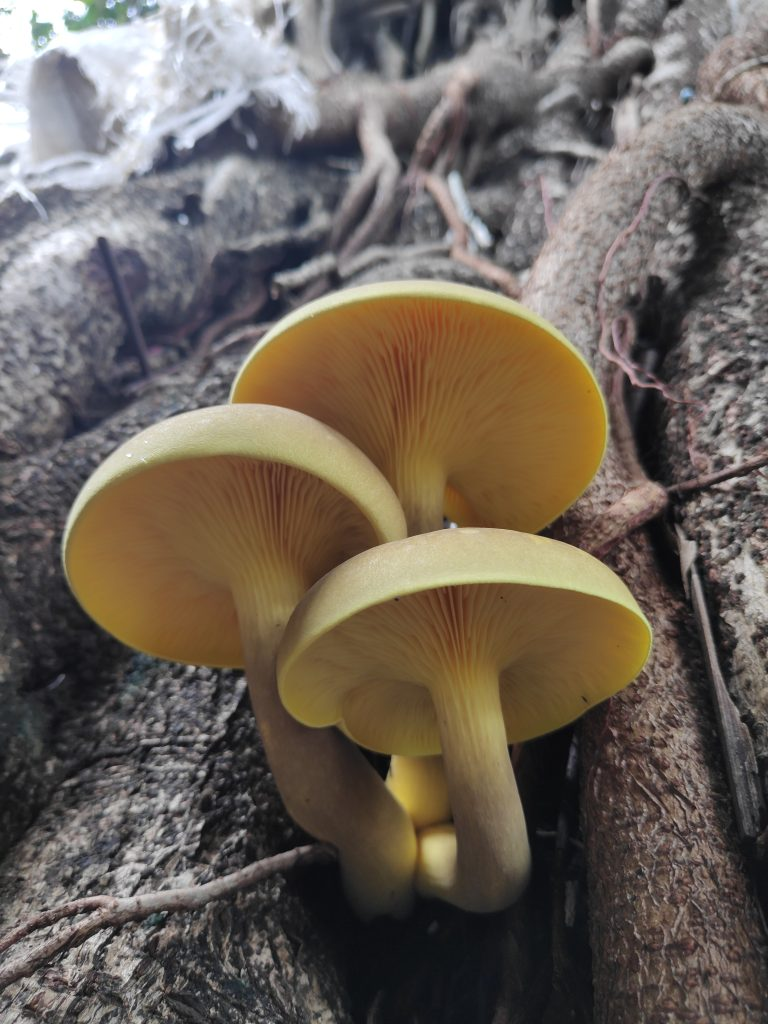
Omphalotus
In parks and gardens, fungi play a crucial role in soil health, breaking down organic material into nutrients that support plant growth. But their influence extends beyond the soil. The fungi that colonise the surfaces of buildings and monuments slowly weather stone and concrete, reminding us that even the most permanent of human creations are subject to nature’s slow, relentless processes of change and decay.

Mycena
From a creative writing perspective, fungi in cities offer a wealth of inspiration. They are metaphors for resilience, persistence, and the ability to thrive against the odds. They remind us of the interconnectedness of life, even in places where nature seems absent. The story of urban fungi is one of subtlety and quiet power, a narrative that unfolds not in grand gestures, but in the small, often unseen details of city life.

Wood ear
Imagine a city where every crack and crevice are alive with the presence of fungi. In this urban landscape, the boundaries between the natural and the artificial blur, as fungi reclaim spaces forgotten by humans. The old, abandoned buildings become canvases for their intricate patterns, while the roots of street trees connect through the mycelial networks beneath the pavement. The city, seen through the lens of fungi, is not just a place of human activity, but a dynamic, living ecosystem where nature and civilisation coexist.
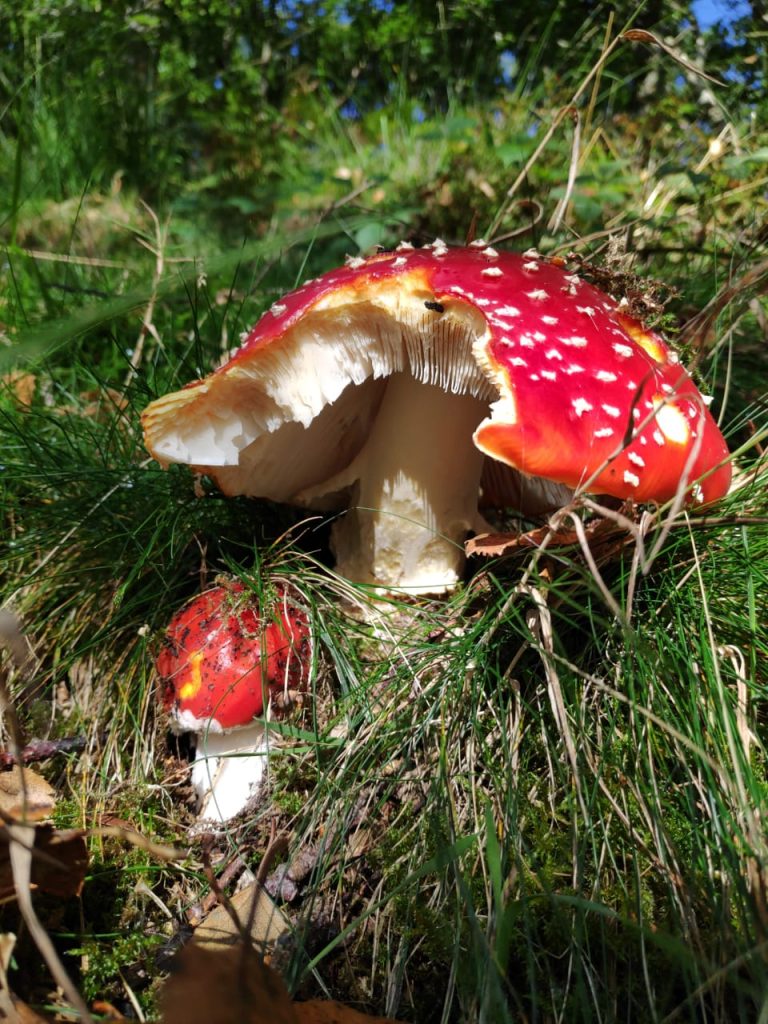
Fly Agaric
Fungi in cities challenge our perceptions of urban life. They invite us to look closer, to find beauty and complexity in the most unexpected places. They remind us that the city is not just a human creation, but a habitat where many forms of life, seen and unseen, play their part in the ongoing story of the world. Through creative writing, we can bring these hidden narratives to light, exploring the rich, often overlooked world of urban fungi and the lessons they offer about life, resilience, and the power of nature.
